Rangahau | Research
At the heart of Rere ki uta, rere ki tai is research that supports change—on the farm, in communities, and across Aotearoa. Our rangahau blends Mātauranga Māori with Western science to explore how land management practices can restore the mana and mauri of the soil, support farm profitability, and build long-term resilience.
Blending Knowledge Systems
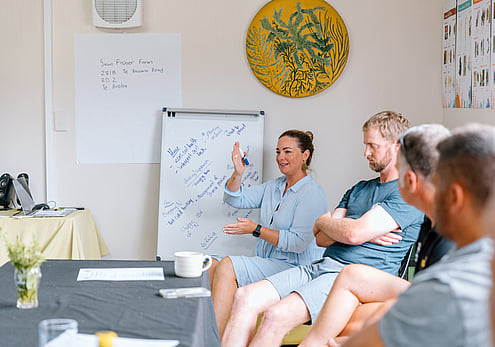
We take a kaupapa Māori-led, systems-based approach to research. Our team includes scientists, mana whenua, rural professionals, and farmers. Together, we explore:
The health and function of soil and pasture systems
Impacts on milk quality, meat yield, and animal health
Emission reductions and nutrient management
Social, cultural, and economic outcomes for whānau and communities
Key Focus Areas

Soil Health
Tracking chemical, biological, and microbial changes with reduced inputs and biostimulants.

Animal Health and Productivity
Examining links between pasture diversity and milk/meat quality and performance.

Greenhouse Gas Emissions
Monitoring the reduction of GHG emissions through regenerative practices.

Farmer Insights
Capturing the lived experiences, values, and behaviour change of participating farmers.

Mātauranga Māori
Embedding maramataka, whakapapa of soil, and Māori-led indicators into research design.
Loyal to Soil

Digging deeper into soil, health, and profitability.
In 2022, Rere ki Uta, Rere ki Tai hosted the Loyal to the Soil Tour, a nationwide series of workshops with world-renowned soil ecologist Dr Christine Jones. Across five locations, from Dunedin to Atiamuri, Dr Jones delivered powerful insights into the role of soil biology in farming success — showing how healthy soils can fix nitrogen naturally, prevent nutrient loss, and boost farm profitability.
Over 700 farmers, advisors, and land managers engaged with Dr Jones’ three key principles for farming within environmental limits:
• Support microbial communities to fix nitrogen
• Improve the soil’s bio-filtration capacity
• Maximise pasture diversity to reduce inputs
Farmers heard real-world examples of how these practices support animal health, reduce costs, and improve resilience — with pilot farmers like Miah and Jenny Smith sharing their own seven-year journey from conventional to more biologically supported systems.
This tour was a defining moment in our project — helping to shift thinking, spark curiosity, and grow a community of farmers committed to learning from their soil.
Tour stops: Dunedin • Ashburton • Taranaki • Hamilton • Atiamuri
Lincoln University Research Trial

Testing seaweed solutions for healthier farms – from soil to stock.
Over two years, Rere ki uta rere ki tai partnered with Lincoln University to investigate the impact of AgriSea’s seaweed-based biostimulants on soil, pasture, and animal health. The research compared traditionally fertilised pastures with those treated using AgriSea biostimulants across a variety of pasture types, including diverse and strip-grazed systems.
What we have found so far:
Healthier soils – increased organic carbon, better water-holding capacity, and higher microbial activity.
More plant-available nutrients – especially usable nitrogen, reducing reliance on synthetic fertilisers.
Higher pasture yield and quality – improved dry matter production, digestibility, metabolisable energy, and clover content.
Better feed efficiency – more sustained pasture growth and improved grazing outcomes.
This research provides strong evidence that biostimulants, especially when used with diverse pastures, can create more resilient and sustainable farm systems — benefiting not just the soil, but also the animals and communities that rely on it.
Stay tuned: Further results on animal performance and meat quality are being finalised for publication.
Want to follow our research journey?
Receive inspiring stories from the farms, updates on our research, and ways you can be part of the movement from the mountains to the sea.

Learning Modules
As a key output of our research Rere ki uta rere ki tai is developing a suite of practical learning modules. These resources will bring together science, Mātauranga Māori, and on-farm experience to support others on their transition journey.
Each module will focus on a core part of the farm system — from soil health to animal wellbeing, emissions, and profitability — with an emphasis on connection and real-world insight.
Our Partners


Thank you to our funders: