What does the future of farming in Aotearoa look like?
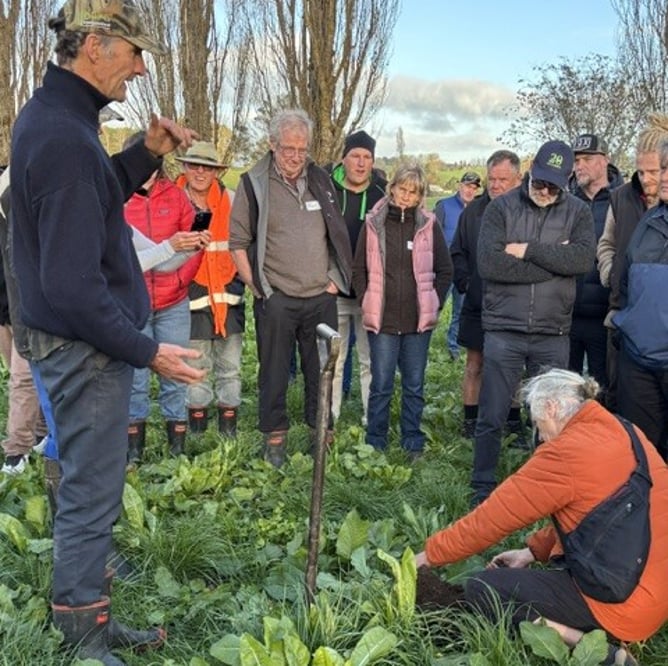
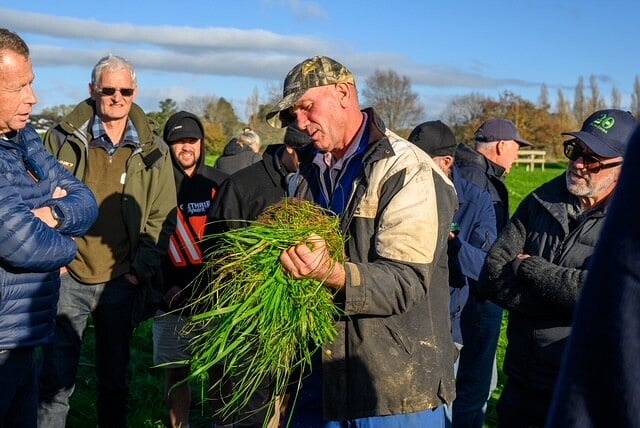
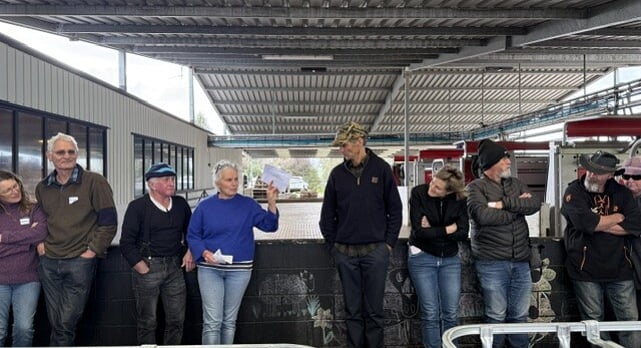
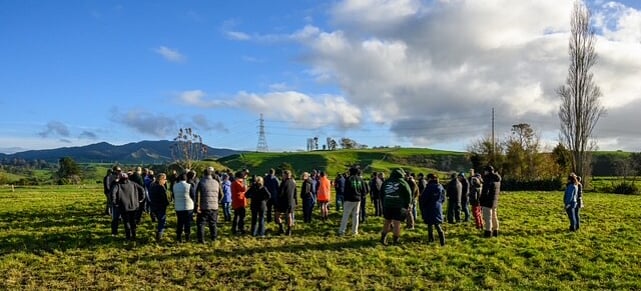
That question brought together more than 100 farmers, researchers, advisors and industry leaders at the recent Quorum Sense Conference in Cambridge. Over two days, conversations centred on practical ways farmers can build businesses that are more resilient, more profitable and better equipped for the challenges ahead.
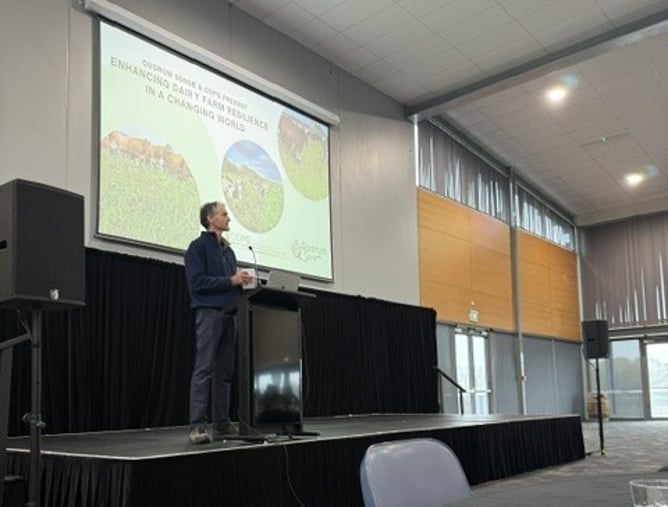
Nick Collins, Farm Engagement Lead, and Alison Dewes, Farm Systems Analyst for the Rere ki uta rere ki tai - Living Soil Project, attended and presented at the conference, sharing insights from the project while also learning from farmers and researchers exploring more functional farming systems.
For the Rere ki uta rere ki tai - Living Soil Project team, the conference reinforced something that sits at the heart of our work: healthy farming systems don't come from one product, one practice or one quick fix. They come from understanding how every part of the farm works together.
Building resilience in changing times
With rising input costs, volatile markets and increasing environmental pressures, one message came through loud and clear. Farmers are looking for ways to build resilience by creating farming systems that work with nature, rather than relying on ever increasing external inputs.
Dr Alison Dewes said many of the discussions focused on moving towards more circular farming systems that improve both environmental and financial outcomes.
"Now more than ever it is recognised with high fuel prices and input prices that we all need to streamline businesses and work out how to have a more circular system in our farming designs."
Rather than simply reducing costs, farmers were exploring how thoughtful system design can strengthen the entire business over the long term.
One of the most valuable parts of the conference was hearing directly from farmers who have already made that transition.
They openly shared their experiences of moving to lower nitrogen systems, introducing more diverse pasture species and redesigning their farming systems to improve resilience without compromising profitability.
For Alison, those real-life stories were one of the highlights.
"The case studies were excellent. Farmers openly shared their transition, their profitability and the system changes they had made to create businesses that are now far more enjoyable to work in and on."
Dr Alison Dewes
Just as importantly, those farmers spoke honestly about the journey. Transition takes time. Soils need time to adapt, biological systems recover gradually, and meaningful change doesn't happen in a single season. But the long-term benefits were evident across many of the farms that presented.
Better systems create better outcomes
Another consistent message throughout the conference was that improving one part of the farm often creates positive flow-on effects elsewhere.
Alison's presentation focused on the factors contributing to New Zealand's high rates of involuntary culling in dairy herds. Rather than viewing animal health in isolation, she highlighted how nutrition, heifer growth, stress reduction and disease management all work together to improve herd longevity.
Across many of the case studies, farmers reported excellent animal health outcomes, including lower empty rates, healthier cows and improved longevity within their herds.
These weren't isolated improvements. They were the result of farming systems designed to support both the animals and the environment they live in.
Nick Collins believes this system's thinking is where the greatest opportunity lies.
"If done well in a synergised way, a compounding effect occurs across multiple aspects of the farm business and the ecosystems that surround it."
Rather than treating soil health, pasture management, nutrient use, biodiversity and animal performance as separate challenges, farmers are increasingly recognising how each decision influences the next.
Stronger together
The conference also highlighted the value of collaboration.
Alongside New Zealand farmers were more than 20 Australian farmers and industry representatives, creating opportunities to share ideas, compare experiences and learn from one another.
Nick's presentation explored the power of bringing together practical farming knowledge, science and Mātauranga Māori to solve complex challenges.
He says the best outcomes happen when different knowledge systems complement one another rather than compete.
This was an approach that resonated strongly with many attendees, including the Australian delegation, who were particularly interested in how the Rere ki uta rere ki tai - Living Soil Project integrates indigenous knowledge alongside scientific research and practical farming experience. This whole-system philosophy sits at the heart of the project, which brings together Mātauranga Māori, western science and farmer knowledge to support resilient, profitable and farm systems that demonstrate alignment of all parts of the system:
Maybe agriculture can learn from the world's Blue Zones, where longevity comes not from maximising one variable but from balance, moderation and connection. Farming systems are no different. Long-term success comes from finding the sweet spot where productivity, profitability and natural capital reinforce one another.
This is why the future is not a choice between conventional and regenerative agriculture. It is a shift towards systems agriculture—or what we could describe as Alignment Agriculture: Its purpose is simple: align people, land, animals and business so each strengthens the other.
That requires moving beyond silo thinking. We need to connect genetics with longevity and profitability, wetlands with flood resilience, biodiversity with productivity, staff wellbeing with business performance, and soil biology with long-term profitability. Every decision should strengthen multiple parts of the system instead of solving one problem while creating another.
Looking ahead
The strongest takeaway from the conference wasn't simply that farming is changing.
It was that many farmers are already proving what's possible.
Across the country, farmers are demonstrating that resilient farming systems can improve profitability, strengthen environmental outcomes, support healthier animals and create businesses that are more enjoyable to operate.
For the Rere ki uta rere ki tai - Living Soil Project, those conversations confirmed that the work already happening alongside farmers is closely aligned with where the wider industry is heading.
By working together, sharing knowledge and taking a whole-farm systems approach, New Zealand has an opportunity to lead the world in building productive farming systems that benefit people, animals and the environment for generations to come.
"The massive opportunity we have as a dairy sector and primary production sector in general is through best practice regenerative principles to achieve upwardly compounding wins across economics, climate, people, communities, water quality, wellbeing and biodiversity. No other country in the world has this opportunity."
Nick Collins