By Nick Collins
As we head towards winter, pasture cover becomes one of the most important levers farmers have to set up the season ahead. Across the farms involved in the Rere ki uta rere ki tai - Living Soil Project, what we are seeing right now reflects just how much impact early decisions can have on winter performance and beyond.
What are we seeing on farm right now?
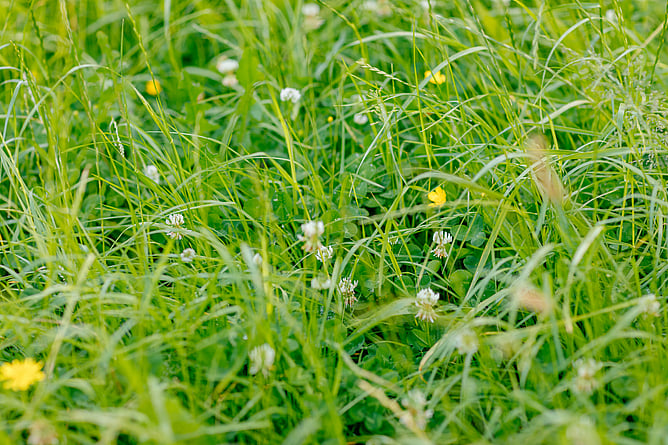
Covers are generally in good shape after a relatively kind summer, with farms that were able to move to a longer grazing round early (in December–early January) in particularly strong condition.
Why is pasture cover so important going into winter?
This is key to setting the platform or feed wedge so we can manage our winter rotations and adjust feed intake with supplement use as needed depending on growing conditions.
A rule of thumb I always worked to was to have APC at 1st June equal to APC at start of calving. Depending on context this can vary but for my situation it was 2400kg DM/ha APC. I would hold this through winter with rotation length and stored feed in the form of hay and silage.
If we don't get it right at dry off then potentially we will burn through too much supplementary feed or limit grass growth and recovery during winter months through having to speed up our rotation.
What are the common mistakes farmers make at this time of year?
Milking on too long, particularly when payout is high, not targeting body condition score early and drying cows off accordingly, then struggling to get weight on these cows through winter and potentially impeeding on winter feed supplies which could impact next season's production.
Carrying empty cows through into autumn because they are still milking well.
Not monitoring growth rates or expecting extra growth from N based ferts at lower soil temps and higher soil moisture.
What does “good” pasture cover look like?
It's context specific, every farm has different circumstances around SR, infrastructure, climate, contour, soil type, farm system.
As a rule of thumb 2300-2500 kg/Dm/ha 1st June.
Practical actions farmers can take now
Monitor well in terms of APC, BCS, stored feed and feed contracts in place, soil temp, rainfall current and predicted.
Look long range, eg Ken Ring, understand and connect to your taiao. Things go in cycles, often a good spell of weather and growth can be followed by a not so good.
Appreciate the nature of current climate patterns being extreme at times and can hit anywhere, any time. Build buffers in your systems for this.
Don't rely on good weather to drive pasture growth for you. It may not come when you need it.
Look after your cows and they will look after you. And this applies to young stock. They are our future. Never compromise our herd replacements.
The role of soil health and biology
This is paramount and drives the system. If we take a living systems approach we can drive strong economic performance.
Autumn and winter lay the foundation for the rest of the season. Setting up for next season in a biological system starts in December with rotation lengths, strong recovery periods, building soil function at depth through biological process and protecting cow condition and pasture covers.
Our underground workforce build the ecological economy for us. If we drive nutrient cycling and pasture growth with the right ingredients and space our soils will thrive during the rebuild of winter.
What are we seeing on farm?
Yes lots. We see this working very well when farmers are proactive with all of the above, have highly functional soils, diverse pastures, long recovery periods to promote more energy(sugars) to feed soil microbes, which drive the nutrient cycling and soil building process at depth.
They are leveraging off the free services provided through a living systems approach, those being oxygen, n, water, sunlight, carbon, biology, and minerals.
They are seeing the compounding effect of building these synergies.
The longer-term benefits
As above, an upward compounding improvement to the resilience of the farm ecosystem, improvements to animal and human health and wellbeing and economic wellbeing.
An increased ability to cope with extremes of weather or commodity price, day to day mgt gets easier and more enjoyable, rewarding.
A greater level of connection to their work and improved understanding of the interconnectedness of living systems.
An increased awareness of the ecological services they are adding to their farm systems, rather than an extractive mindset or approach.
Some farmers are now considering organic certification to add further value and market access security.
This perspective strongly reflects the kaupapa of the Rere ki uta rere ki tai - Living Soil Project, where the focus is on understanding the whole system, from soil through to animals, people, environment and long-term outcomes. It is about recognising the interconnectedness of farming systems and working with them, not against them, to build resilience and performance over time.