By Alison Dewes
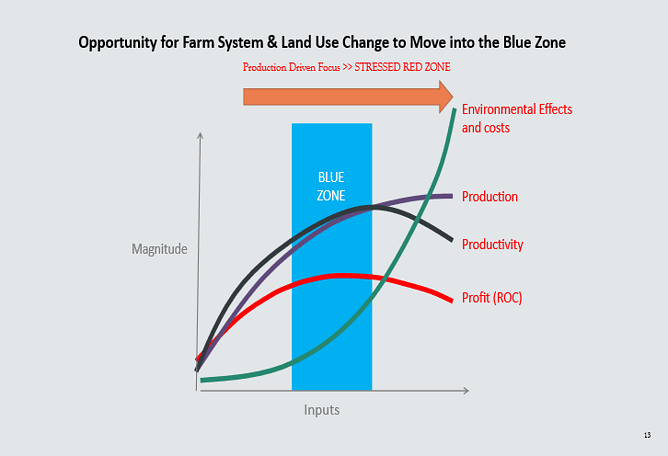
We are at a pivotal time in N agriculture, forcing us to rethink our systems. When this is done well -production holds or improves, costs fall, emissions reduce and the system becomes more stable. Our dairy farming is entering a new phase with rising input costs, pressure to reduce greenhouse gas (GHG) emissions and increasing climate variability.
Its evident a shift from silo thinking to system thinking gives multiple benefits. Better pasture Smarter animals Integrated trees Technology (digital + biological) Lower carbon footprint
For example we see more evidence that diverse pastures (clover, chicory, plantain, herbs) can provide higher-quality feed, using less water, for longer, more milk in hotter months, better nourishment and condition. Co benefits can be lower parasite burdens, reduced reliance on anthelmintics, lower spore counts in pastures, and generally improved health and immunity for animals.
This optimisation has a stacking effect if farms can introduce dung beetles as well. Natures technology provides a biological engine for both productivity and emissions reduction. This occurs through a suite of effects; they break down dung rapidly, reduce parasite habitat, ,improve nutrient cycling and increase soil aeration and water infiltration. More nutrients returned to soil → less fertiliser needed, reducing nitrous oxide emissions from dung patches, leading to improved pasture growth and utilisation.
Shade and trees = production + welfare + carbon. We know that heat stress is already limiting production and reducing welfare in many NZ regions. Note that 4–6 m² shade per cow is required, and the benefit is that this can deliver up to +0.5 kg milksolids/cow/day – so for a 400-cow herd this is up to +200 kg MS/day in hot conditions providing water intake is adequate.
Trees (silvopasture) also lower body temperature and improved rumination, shelter from wind and rain, carbon sequestration, erosion control, and can provide medical forage. Ultimately: appropriately planted trees are one of the highest-return interventions on many farms.
Breeding: We need to be breeding for efficient, low-emission animals. Future-focused dairy systems select cows that convert pasture efficiently, maintain condition, rebreed easily, require fewer interventions.This enhances longevity in herds, along with the co benefit of lower replacement rates, and lower emissions and costs.
Health: These systems are showing – reduced mastitis and lameness if managed well, with lower antibiotic use and fewer metabolic disorders.
Ultimately we have to move from high-input to low-carbon dairy systems
Traditionally our systems rely on: synthetic nitrogen fertiliser (high fossil fuel footprint), imported feed, diesel-intensive operations while these regenerative type systems shift toward: Biological nitrogen fixation (clover, legumes), lower fertiliser inputs, reduced fuel use, increased soil carbon – all giving a GHG advantage. This occurs through lower nitrous oxide (less synthetic N), lower methane intensity (healthier, more efficient cows), carbon sequestration (soil + trees), fewer replacements (better breeding and longevity)
Ag technology: enabling precision + performance: Modern ag tech is accelerating this transition. Halter (virtual fencing + animal data) enhances Precision grazing → better pasture utilisation, controlled grazing → improved recovery → more biomass → more carbon, real-time animal monitoring → early detection of health issues. This results in higher pasture efficiency, better animal performance, reduced wastage → lower emissions per kg MS
Remote sensing + mapping (e.g. satellite, LIDAR, farm platforms) is also helping our farmers through - Identifying high- and low-performing areas, matching land use to land capability and enabling targeted planting, grazing, and inputs. This results in smarter fertiliser use, better pasture allocation, and integration of trees and wetlands in the right places
Our power is in stacking technologies: ie: Halter + diverse pasture + trees + genetics + soil biology can deliver 10–15% productivity lift (without increasing cow numbers), lower input use(lowering costs, while also lowering emissions).
Cows are part of the climate solution: When managed well, grazing stimulates plant growth, plants capture carbon → transfer to soil, animals cycle nutrients efficiently. Cows are not the problem —they are part of a system that can reduce emissions and build carbon.
This is now whole-system optimisation — not siloed decisions.
The new generation of leading farms will:
Maintain or increase milksolids
Reduce reliance on fertiliser and fuel
Improve animal and human health and welfare
More precise land use in the right place
Lower GHG emissions
Build resilience into the system
All at the same time.