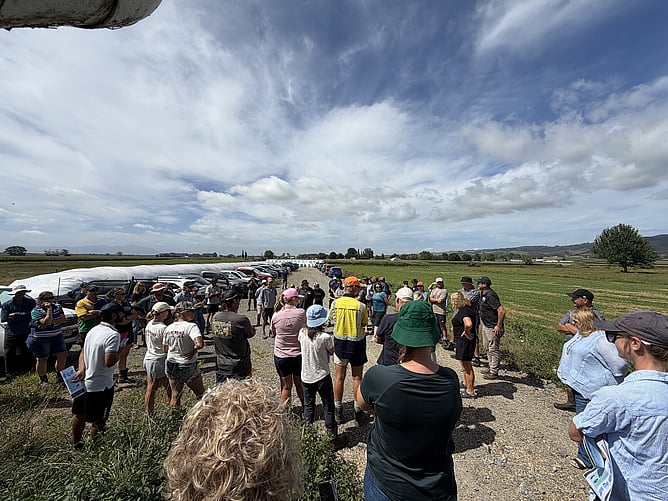
On 25 February, our team from Rere ki uta rere ki tai - Living Soil Project attended the DairyNZ Organic Discussion Day held at Mandy and Pete Patterson’s Utterly Organic farm in the Waikato.
The day brought together farmers, advisors and industry representatives to explore organic dairy systems in practice. It was an opportunity to see the system on the ground, hear directly from the farmers, and engage in open discussion about what transition and resilience really look like.
Here are some of the key insights our team took away.
Silica and Unlocking Nutrients
One of the more technical discussions focused on the use of silica within their programme. Over recent years, silica has been introduced to help manage aluminium and iron in their soil.
By addressing those heavy metals, phosphate and other nutrients that were previously tied up have become more available. In their soil type and context, this has contributed to improved pasture productivity and nutrient efficiency.
It was a reminder that understanding soil chemistry and biology together can unlock real gains.
Seeing the Transition in Numbers
The farm openly shared benchmarking data that showed how the system performed through its transition into organics. Seeing the metrics laid out clearly helped bring credibility and transparency to the journey.
For many farmers, numbers matter. Being able to see performance trends over time made the transition tangible and practical, not just philosophical.
Soil Structure and Aeration
The importance of soil aeration was another strong theme. Compacted soils limit the establishment and performance of diverse pastures.
Seeing permanent pastures, now eight years old and still fresh and productive, reinforced the value of prioritising soil structure as part of long term system design.
Biological Thinking as a Bridge
Before converting to organics in 2018, the farm was already operating within a diverse biological framework.
That foundation acted as a bridge into organics. Transition does not have to be abrupt. Strengthening biological function can be the first step toward a more resilient system, whether organic or otherwise.
Open Minds and Growing Curiosity
Perhaps the strongest signal from the day was the level of interest. A wide range of farmers showed up, asked questions and engaged deeply with the system. There was even some of our farmers from the project there too.
As Mandy shared, “Minds are like parachutes. They have to be open to work.”
From our perspective, the growing curiosity around organic and lower input systems is significant. Regardless of labels, the common thread remains soil health.
When soil functions well, farms become more resilient.
And that is a conversation worth continuing.