Trialling summer cropping on challenging soils
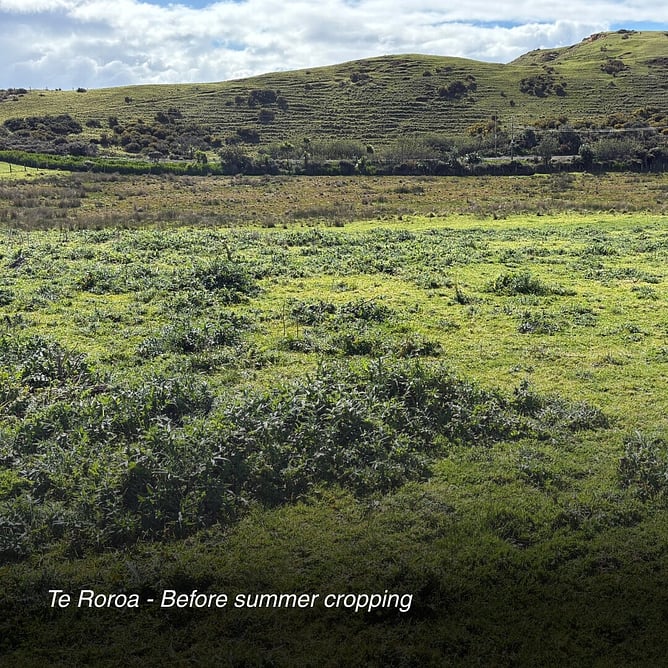
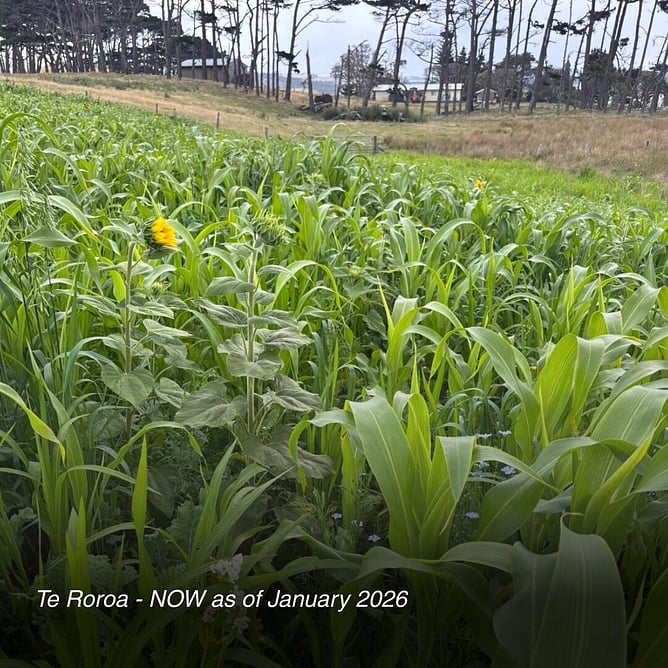
At Te Roroa, the team trialled summer cropping on a very degraded paddock that had been significantly damaged through previous attempts to cultivate sandy soils. The paddock was extremely weedy, with heavy thistle pressure, and was widely considered a difficult area to recover.
Despite these challenges, a summer cropping plan was developed and proposed to support both short-term feed supply and long-term soil recovery. The plan was accepted by the Farm Manager, with the aim of using the paddock as a transition area toward a multispecies permanent pasture system.
The Cropping Plan
To prepare the paddock, it was sprayed out using a combination of AgriSea foliar nutrition, fulvic acid, and glyphosate. Once sprayed, the area was direct-drilled with a bespoke summer crop mix.
The crop mix was carefully designed for the specific region and soil type. Its purpose was twofold. Firstly, to provide high-yielding summer cattle feed. Secondly, to improve soil health and function so the paddock could transition into a multispecies permanent pasture from autumn onwards.
Species selection and seed ratios were deliberately chosen to maximise the benefits of each plant, while also encouraging positive interactions between different plant families.
Building Feed and Soil Function
The mix included both annual and perennial species. The annuals were selected to provide bulk feed and assist with soil conditioning over the summer period. Alongside these, perennial clovers, plantain, and chicory were included to establish deeper roots and longer-term soil benefits.
These perennial species are intended to persist beyond summer and form part of the permanent pasture system once autumn arrives, supporting ongoing productivity and resilience.
Challenges During Establishment
The implementation of the plan did not come without challenges. The Te Roroa team experienced difficulties sourcing a contractor willing to drill such a small area. Once drilling was completed, issues with sowing depth further impacted establishment.
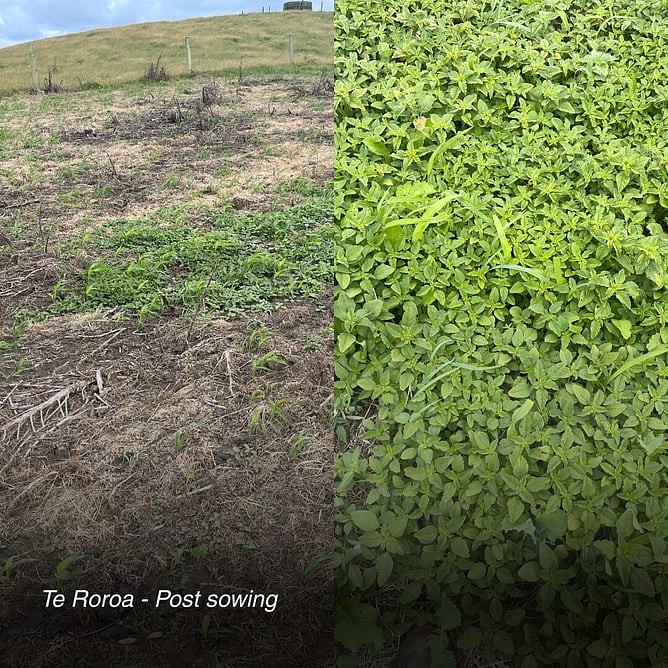
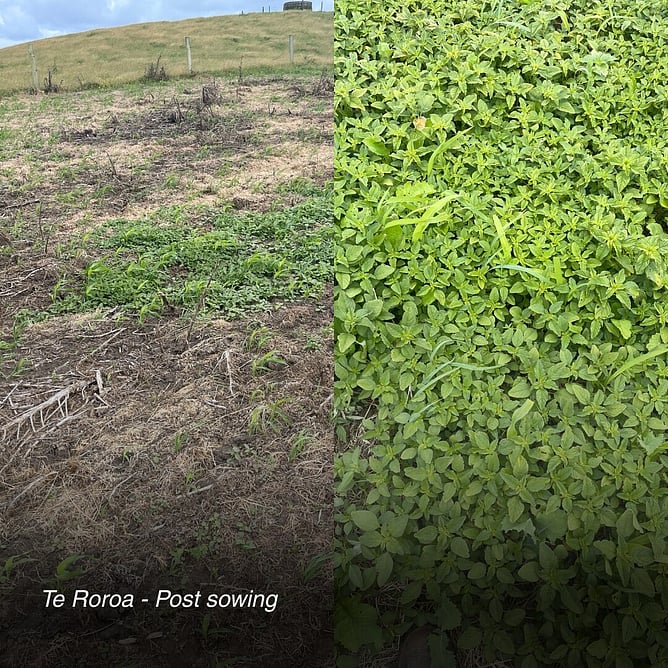
During the germination period, the paddock appeared patchy and continued to experience significant weed pressure. At this stage, expectations were low, and the Farm Manager was not confident the crop would deliver the intended outcomes.
A Turnaround After Rain
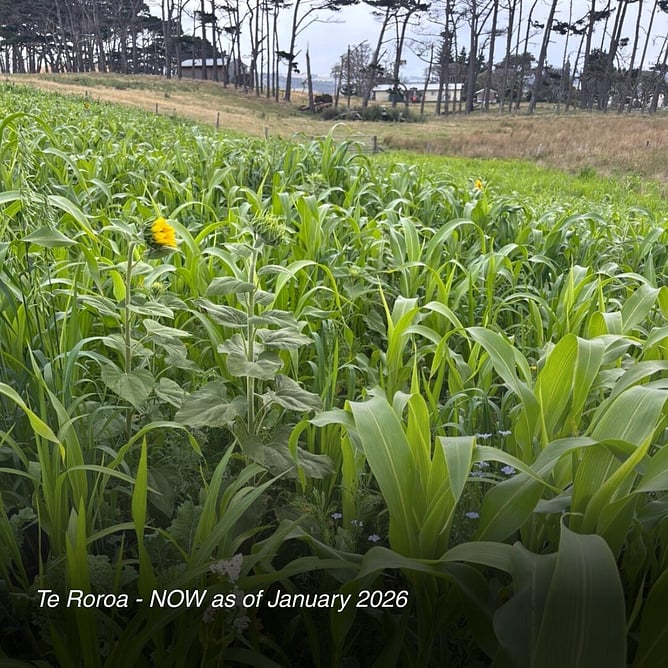
Following rainfall over the Christmas period, the crop responded strongly. Growth accelerated, and the paddock began to fill in, impressing both the Golley and RKURKT teams. What had initially looked like a struggling establishment became a clear demonstration of how systems can respond once conditions align.
Next Steps
The focus now shifts to grazing management. Multispecies crops require a different approach to grazing than standard systems to promote regrowth and optimise recovery. Nick will be working closely with Golley to develop a grazing plan that supports plant persistence, soil health, and overall system performance.
This trial highlights both the challenges and opportunities of working with degraded soils. While early stages can be unpredictable, patience, appropriate species selection, and responsive management can deliver meaningful progress toward healthier, more resilient farming systems.