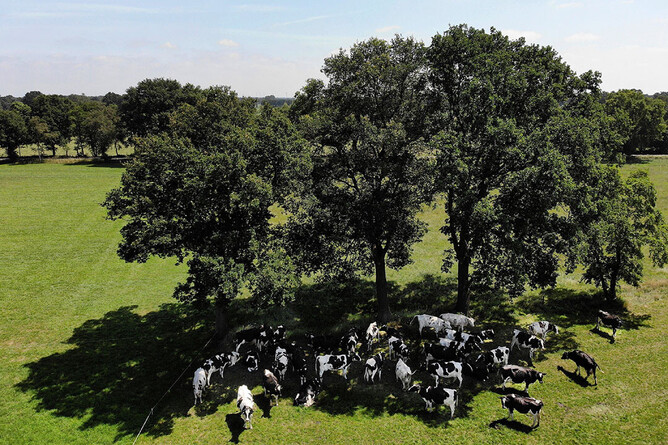
With more extreme temperatures on the way, slightly lower stocking rates, and more trees across our landscapes, there are plenty of upsides, but the risks still need managing. Water, heat stress, fire, and disease all become bigger challenges as conditions warm up. The recent fire near Pōrangahau was a reminder of what may become more frequent as summers intensify.
Summer is arriving with its usual unpredictability: long heat waves, sudden downpours, humidity spikes, and growing fire danger. This is the season where forward planning pays off. Here are the key actions to prioritise now to keep animals comfortable, pastures productive, and the farm running smoothly through December to February.
1. Shade and Heat Stress Prevention
Managing heat stress is one of the biggest drivers of summer animal welfare and production. Cows can lose litres of milk and significant body condition once temperatures exceed their comfort zone.
Immediate steps
Make sure every mob has reliable access to shade, whether natural shelter, hedges, trees, or temporary structures.
Move high-risk animals, such as late-lactation cows, young stock, and recently calved cows, into the coolest paddocks first.
Provide multiple troughs so dominant animals cannot block access during peak heat.
Long-term resilience
Develop a shade and shelter planting plan.
Well-positioned trees reduce radiant heat, lower soil temperature, protect soil moisture, and support pasture growth.
Prioritise north-facing paddocks, races, holding areas, and exposed ridgelines for shade planting.
2. Water Supply: Test, Back Up, and Plan for High Demand
Water is often the area where farmers get caught out. Summer water needs rise rapidly, especially when cows are on high dry matter diets.
Key numbers to plan around
A lactating dairy cow in summer heat may require 70 to 100 litres of water per day.
Cows on high-DM feeds (PKE, baleage, silage) sit at the upper end of this range.
Feeds with 35 to 90 percent dry matter create a strong water draw to support digestion and cooling.
Expect sudden surges where the whole herd drinks heavily within two to three hours.
Practical actions
Walk your lines and troughs. Check flow, pressure, leaks, valves, and trough cleanliness.
Aim for one trough per 40 to 50 cows in hot conditions, ideally with multiple access points.
Build redundancy for your main supply with a backup generator, second pump, or alternative line.
After storms, flush lines to prevent sediment or silt contamination.
3. Feed Pinches: Planning for December to February
Summer feed gaps develop quickly as soil temperatures rise and moisture evaporates.
Watch for
Falling growth rates, especially on north-facing slopes.
Drying shallow-rooted pastures.
Ryegrass stalling between 25 and 30 degrees.
Actions
Extend round lengths early to protect pasture cover.
Identify your “resilience feed”, such as deeper-rooted species, plantain, chicory, or summer crops.
Combine summer forage crops with shade plantings to cool the soil and support pasture persistence.
4. Animal Health: Facial Eczema and Heat Response
Facial eczema risk rises sharply with warm nights, humidity, and moisture.
Do now
Begin monitoring spore counts early.
Pre-load zinc in vulnerable stock.
Identify safe paddocks in advance.
Daily heat stress checklist
Panting
Bunching
Drooling
Shade-seeking
Reduced grazing behaviour
Act early, as heat stress can escalate very quickly.
5. Fire Prevention and Readiness
Dry summers create higher fire risk across farms.
Farm readiness
Clear trash, bark, dead branches, and dry debris from under trees and shelterbelts.
Maintain machinery to reduce spark risk.
Keep water storage tanks, dams, and mobile units full and accessible.
Maintain clear access for emergency services.
Mow firebreaks early before conditions worsen.